Sunday, 10 May 2009

WARNING: A Bophut address is no guarantee of a Bophut Beach location...


Baan Bophut (2nd Left) and the Fisherman's Village looking west

Tripadvisor's ranking based on guest reviews has just downgraded Baan Bophut's position from 10th of 271 hotels in Koh Samui to 3rd of 18 hotels in Bophut. We wouldn't have much cause for complaint if the other hotels listed were in Bophut Beach or the Fisherman's Village, but of the 18 listed, only four are, and one is 10km away.

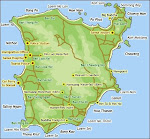
Unfortunately, as well as being a lovely beach village devoid of girly bars, Bophut is a tambon, or postal district, and it covers much of the north and east of the island including Maenam, Bangrak, Big Buddah, a large slice of Chaweng and almost everything in between.

The endearing scruffiness of Bophut Beach road (Moo 1) belies its reputation for some of the finest eateries on the island

Tripadvisor's new listing policy has enabled some poorly reviewed hotels, that were previously buried way-down the former Koh Samui ranking, to morph overnight into Bophut locations with respectably low double-digit scores. Look closer and you'll note that ten of the eighteen listed have less than 20 reviews between them. Two are not even reviewed. Baan Bophut is not in good company here.

I don't know what's going on, and Tripadvisor has not replied to either of my e-mail attempts to find out. But prospective visitors should note that, not listed, are some great, mainly small, family-run hotels in Bophut Beach - the Fisherman's Village and their location can be verified by making sure they have a Moo 1 street address.

The extent of Bophut Beach - The Fisherman's Village from the pier, looking west

Saturday, 2 May 2009

April family holiday update...


The last to be seen of my Panama

We returned last week from a fantastic holiday in Koh Samui. The memsahib and me to our home in Dubai; son Dominic and his Fi to Edinburgh, via Dubai for a few days. My brother Nick was joined in Samui by his kids - Sam and Ruby, who now live in Australia. Nick arrives in Dubai shortly en route to his home (and partner) in France. Another nephew - (young) Nick, his girlfriend Helen and their friend Tweet, also contributed greatly to a wonderful family holiday.

Hotel Family Holt. L to R - Olwen, me (John), Fiona (Fi), Dom, Lucy & Jonny

Most memorable was the birthday cruise organized to celebrate the moveable feast that was my 60th birthday - two months after the event, which I had spent alone in Dubai. A boat trip around neighbouring Koh Pha Ngan had been arranged through Kenny at Sunseekers and we duly departed from Petcharat jetty in calm seas accompanied by fruit, beer and singer guitarist Mark James who, with Fi on violin, were to provide musical diversion.

First stop was the beautiful beach at Thong Nai Pan, where most had lunch. Approaching the bay at speed into a headwind caused the loss of my beloved Panama hat and the swim ashore for lunch and back, consumed all my diminishing stamina. It didn't help that, as I hadn't brought shorts, I undertook the swim fully clothed.

We stopped again at stunning and isolated Bottle Beach, before heading for a final stop on the southern side of the island, closer to Samui, to enjoy Mark And Fi's music while watching the sun go down. The weather, unfortunately, had it's own plans and we were hit by a squall that seemed to appear from nowhere, forcing the decision to head for home.


The strength of the gusting wind quickly intensified, before blowing over as swiftly as it had arrived

Finally back at Baan Bophut with glasses filled and the squall replaced by an orange sunset, we enjoyed a fantastic unplugged performance by our musicians. Olwen produced a surprise birthday treat, my Mum's recipe Christmas cake, unadorned, smuggled unbeknownst to me from Dubai.

Mark & Fi gave a fantastic, unamplified performance

Fireworks and fire-balloons from Tweet, and lots more beverages, completed an unforgettable belated birthday.

Dom & Fi toward the end of a beautiful day

Escape - Relax... and get out on the water

Baan Bophut's abiding mantra encourages prospective guests to escape and relax. And while we continue to discourage those looking for action and adventure (including ping-pong and beach volleyball), I feel bound to inform you of the hotel's only surrender to the potential for physical activity and the opportunity to exercise.

Lucy snatches a paddle-break aboard one of Tik's 'Bismarcks'

Inspired by the popularity of Tik's kayak rental business and her own burgeoning enthusiasm for developing arm and upper-body strength, Lucy acquired a couple of solo kayaks to add to his fleet.


The same Thai kayak builder also makes, what they call Tri-Yaks, to accommodate three people and other larger kayaks designed for fishing. Both are future options for fleet enlargement if there is sufficient interest from guests.

Not yet available for rental are Lucy and Jonny's new 3.6m (11'6") Naish Stand-up Paddle Boards (SUP).

SUP is an increasingly popular surface watersport, with Hawaiian surfing origins, that benefits paddlers with a strong core workout. Importantly for almost waveless Samui, SUP is a form a surfing that allows one to go places without any need for waves to be present.

Jonny paddles back from breakfast in Big Buddah

Adopted by an increasing number of surfer dudes who appreciate the enhanced wave-spotting potential of being able to stand-up on a stationary board. SUPing offers surfers the ability to catch more waves, as well as providing a better view of incoming waves.

Lucy's 3.6m Naish SUP with Polynesian design and padded deck area

Tuesday, 7 April 2009

Chiang Mai Friends Part 1 - P Law


In a quite corner of Chiang Mai, by the university, you can find Baan Phee Du, the home and workshop of artist Khun Lek, also known by his nickname – P Law.

P Law offers pottery lessons to the novice and the experienced alike, charging 300 THB (8.5 USD) an hour which includes clay and instruction (should you need it).


Spend a couple of hours there throwing shapes, then go back later in the week and work on your glaze. P Law will then fire it for you in one of his beautifully homemade kilns.


The house and garden (Baan Phee Du means 'Fierce Ghost House', much to his neighbours dismay) was also the home for a year to the girls from Sabai , Fiona & Miranda.


Baan Phee Du is an inspirational place, full of life and light. Vases, bowls and cups one could easily pay 100 dollars for in a gallery, lie about the place. Rejected by the master, flawed in unknown ways (they looked great to my untrained eye), beautiful and unique. Discarded but respected, each one a reminder to P Law of past experimentations.


Baan Phee Du is open daily from April to June, mornings only.
Check out P Law here. Tel: +66 (0) 53 401111 or +66 (0) 85 6143463


Tuesday, 24 March 2009

Put your money where your mouth is...Samui dentists


Writing about the flossing monkeys of Lopburi and brief reference to my own dental hygiene, are a reminder that for me, my family and many of our hotel guests, a holiday in Koh Samui is not complete without a visit to the dentist.

Thai dentists are renowned as being some of the best in the World, with Bangkok increasingly celebrated as a full service destination for medical/dental tourism. I was astounded to learn that in 2006 1.32 million 'patient tourists' paid for an exotic Asian holiday with the saving on medical or dental treatments. In the same year, 1.2 million foreigners sought treatment in Thailand, with quality of care and cost cited as the principle reasons for their choice of destination.

Back to Samui and dentists: so uniformly good are the dentists and reasonable their prices that we've actually had our own medical tourists stay at Baan Bophut. Two guests, over the past two years, have vacationed in Samui just to receive extensive dental treatment locally at a fraction of the European cost. We may well have had more, but the two mentioned made no secret of why they chose Samui.

Samui's four major international hospitals each have dental departments, but there are numerous other excellent dental clinics to choose from, usually at lower cost. All conduct restorative or general dentistry from a basic inspection, clean and polish, routine fillings, extractions and root canal work, but several specialise in much more complex oral issues, including a broad spectrum of cosmetic treatments for the vain. I note that laser whitening is on offer at several dentists locally for around Bt 8000 (US$ 220), but this may come down as the recession bites (sorry).

Lucy, the memsahib, me and other family members each have our favourite dentist. My own first choice, Dr Tee at Dental Design, just 5 minutes from the hotel, is a gentle and considerate practitioner that I've used for years. Olwen's favourite is a lady dentist who's clinic is even closer to the hotel. Lucy, I think, favours yet another.

Here's a list of the hospitals that have dental departments and this, an incomplete listing of independent clinics, just those that have advertised in the Koh Samui Directory - there are many more.

Visitors can make their own appointments and prospective hotel guests can ask Mia on reception to book for them. Mia will also arrange for Pee Moo, the hotel's maintenance man/taxi driver to take you and pick you up when the clinic calls to say you're done.

Sticking with monkeys...


Without wishing to turn this into a monkey blog, but having a soft spot for primates, a transitory (twice a day) interest in dental hygiene and a passing curiosity in what was happening in the above video, my research revealed information of modest enough value to post here. 
______________________

According to a research paper published earlier this month, Long Tailed Macaque monkeys have been observed by Japanese scientists from Kyoto University teaching their young to clean between their teeth, by flossing. The monkeys that inhabit a Buddhist shrine in Lopburi, 150 km north of Bangkok, are known to pluck hair from the heads of visitors to use as floss. Worshipers consider the monkeys to be divine servants, the researchers said, which helps explain why some people tolerate the Macaques tugging out their hair.

I've never been a big flosser myself and while I've sometimes felt the inclination, the requisite material has never been conveniently to hand. It's never occurred to me until now that (unlike the monks that also inhabit the shrine) I've had a whole head-full of floss available to me all along and have usually made do with an improvised toothpick.
   
The research team from Kyoto University headed by primatologist Nobuo Masataka, distributed a wig-load of 20 cm long hairs throughout the shrine habitat and videotaped the primates engaged in using them as tools to clean between their teeth. Around 50 of the monkeys were observed pulling strands of hair back and forth between their teeth. 

The Kyoto team focused their research on seven female adult Macaques, each with a one-year-old infant. When the mothers sat facing their young, each bout of flossing was noted to take around twice as long as usual, and the mothers paused and repeated the process about twice as often. Similarly exaggerated behaviour occurs when human mothers teach their children, noted Masataka, who went on to state: 'These findings suggest education is a very ancient trait in the primate lineage'. Without wishing to denigrate the good professor nor devalue his research, it rather sounds like a revalation of the unconcealed. How else do young animals learn stuff, except by watching someone else?

HISTORICAL FOOTNOTE (for pub quiz fans)
Dental floss is an ancient invention, researchers have found dental floss and toothpick grooves in the teeth of prehistoric humans. Levi Spear Parmly (1790-1859), a New Orleans dentist is credited as being the inventor of modern dental floss (or maybe the term re-inventor would be more accurate). Parmly promoted teeth flossing with a piece of silk thread in 1815. In 1882, the Codman and Shurtleft Company of Randolph, Massachusetts started to mass-produce unwaxed silk floss for commercial home use. Johnson and Johnson Company of New Brunswick, New Jersey were the first to patent dental floss in 1898. Dr. Charles C. Bass developed nylon floss as a replacement for silk floss during WW II. Dr. Bass was responsible for making teeth flossing an important part of dental hygiene 

Tuesday, 17 March 2009

Mistreated coconut money gaines revenge... kills owner


A Samui born and trained coconut-harvesting monkey turned on its abusive master last week and killed him with a well directed coconut, kicked from the top of a 50m palm. It's reported that one of the nuts hit Luelit Janchoom who died from the resultant blow to the head, before reaching hospital.

Luelit is said to have beaten the monkey, named Brother Kwan, when he showed reluctance to climb a second high palm. Forced to climb by the thrashing and cleary bent-out-of-shape, Brother Kwan began forcefully kicking the ripe nuts from the crown of the tree instead of using the twisting motion that coconut monkeys are taught to detach the nuts from their tough stalks.

The incident took place in the mainland province of Nakhorn Si Thammarat where Luelit and Brother Kwan had been hired to harvest nuts by a coconut farmer. Each nut would earn the pair 2Bt and on average the monkey would harvest around 300 nut a day.

A monkey expert told the Samui Express, who reported the incident on 9th March, that a monkey is a special animal that respond well to kindness, but become furious if harsh treatment and words are used against them. I'm not sure that you have to be much of an expert to figure that out.


This coconut monkey makes ready to twist the stalks to remove the nuts. Angry and humiliated, Brother Kwan is reported to have kicked the nuts furiously sending them to the ground. It is tragic that Khun Luelit's head got in the way of one on its way down, but we have to hope that a lesson has been learned by others with abusive tendencies. We're optimistic that Brother Kwan is not punished for his action and goes on to work with a more humane handler.

Saturday, 14 March 2009

National Thai Elephant Day... elephant and chips anyone?


The event, held annually on the 13th March, would have escaped my awareness completely if I hadn't noticed a news report, announced today by the Bangkok Metropolitan Administration (BMA), that they intended to microchip some of the estimated 200 street elephants used to beg from sympathetic tourists.

I don't know why this text and that above is underlined, nor do I know how to get rid of it.

Hiding out with their mahouts during the day on rubbish-filled wasteland, illegal elephants are made to plod the still hot tarmac of the city's tourist districts from early evening, enduring the pollution and traffic of Bangkok's urban jungle until the early hours. Begging street elephants in Bangkok suffer a miserable and dangerous existence.

It has not always been so, elephants have been valued for their strength and intelligence for millennia. In recent decades their power has been replaced by machinery in construction and transportation, but it was Thailand's ban on logging in 1989 that simultaneously put thousands of elephants out of work.

From being a valuable, revenue earning asset for many rural families, the elephant became a financially exhausting burden. With no state support, begging on city streets was seen as the only option by many mahouts. The lucky few received a licence for their beasts to perform to tourists, but the majority of elephants in the city are unregistered and unregulated.

The problem has grown with the city's indifference and failure to penalise lawbreakers. The cost of the miniscule fines handed out to mahouts can be earned back within a few minutes begging, so the offending illegals are sneaked back into the city often only hours after they have been removed.

Todays BMA's announcement that illegal pachyderms will be surveyed, chipped and transgressors returned to rural areas - with the assistance of the army and the State Railway Authority - might reduce the problem, but urban elephants are big business. A source quoted by today's The Nation said elephants' owners earned a combined Bt10 million a year by having the beasts beg in the streets, while mahouts received hundreds of thousands of baht. The source believes both national and local politicians benefit from the elephant problem.

Here a smiley little Chiang Mai guy was too much to resist for Lucy and mum Olwen, who ignored our pleas not to encourage the begging trade. Disobedient women have done much to add to the growth of elephant begging.

Thursday, 12 March 2009

A quick update... for family and friends of the hotel


Lucy sent a couple of pics today of the new twin sun-loungers she's had made. Arranged with traditional Thai pyramid cushions and a small table in the middle, they'll do double duty as an agreeable spot to enjoy sundowners or a romantic supper on the beach. There's also evidence in the photos that Tik has got his kayak rental enterprise in operation.

In a January post I described how the beach had been dramatically altered by the tide, winds and raging torrent of the nearby monsoon-swollen stream. Contrast the views above, taken yesterday, of the beach fully restored by the action of the sea, with the one below from early January. "The sea may taketh, but thomtimes, the sea giveth back". Who said that? Doh! Me.

At about the same time in January, with the erection of a huge crane, I posted a warning that the site across the road was starting up again and with it, the potential for some unwelcome construction noise. No sooner had I formed the words than the site stopped and went back into hibernation. We have no authoritative information on when, or if, work will recommence.

For family and former guests, the news and some photo evidence that Blackhead has recovered from her near fatal poisoning. She was saved only by Lucy's quick response when the poor thing had dragged herself back to the hotel to die, in getting her to the vet pronto, Blackhead is seen here, playing like a pup with barman Tik, another faithful friend of the hotel.

I'm soooo looking forward to being in Samui for Songkran this time next month, especially as the occasion brings together the Hotel Family Holt and our partners for the first time in a couple of years. We've also got the bonus of my brother Nick; a good assortment of nephews and a niece, with their partners. Also a work friend and his wife from Dubai, all staying at the hotel at the same time. We'll have a blast and I can't wait to get on the end of Tik's attempts at a Siam Sunray while watching one of our spectacular sunsets.

photo credit: Chris Lyon - friend & multiple repeat guest


Friday, 6 March 2009

Thailand's sacred tattoos - sak yant - so much more than skin art...


Do not confuse sak yant with the increasingly popular holiday compulsion among young people that, until quite recently, was the menacing fashion of heavy-metal rockers, bikers, criminals, love-lorn sailors, football hooligans and the social outcast. They share only skin and ink. Let's draw a line under it.
______________________________

I've written before about how animism or spirit worship predates the arrival of Buddhism and is interwoven into the cultural fabric of Thailand and its neighbours, Cambodia and Laos. In many respects, there is an even deeper belief in animism and its fundamental tenets: that there is no separation of the body from the soul; that all living things possess a soul and, (with the premise of reincarnation) each has an indestructible life force. So what has this to do with tats?

The belief system also maintains that material objects possess a soul and some have an influential engagement with one's own karma or fate. The best example of this in Western or Christian society would be the wearing of a lucky charm, a St Christopher or holy medal. In Thailand, amulets are worn as bracelets or on a chain about the neck to act as a talisman. Sacred tattoos, or sak yant, like amulets which have been blessed, are believed to carry powers of their own.


In Thai tradition, being tattooed by a monk is a deeply spiritual experience and was very common among men who believed that their tattoo would grant them strength and protection, not only from the spirit world, but from danger and in particular, harm from weapons. Sak Yant remains popular with soldiers, policemen and gangsters.

Only sacred monks can apply this work and today it is practiced in only a very few temples. The most famous remaining venue is Wat Bang Phra, 80km to the west of Bangkok. Sessions are held daily throughout the year, but the tattoo festival which starts today, is held every year in March and is special for adherents of the sak yant culture whose ultimate blessing is received in the form of a tattoo. Men who have received tattoos come to the festival each year to pay their respects to the monks and have their protection level topped-up. During the festival many devotees will enter a trance-like state, others appear to become possessed adopting the calls and characteristics of their animal tattoos, such as the monkey man, below.


The monk tattooists pray over the image as they work, instilling the design with the tradition qualities associated with it. The tattoo of a tiger, for example, would be expected to protect the wearer from physical harm and lend the strength to defend those so adorned against evil. But the markings can include ancient symbols drawn from calligraphy and numerology and illustrations of animals and mythical characters are common. Notably, sak yant tattoos are religious, never decorative and the choice of design is often left to the monk practitioner.


Tattoos are still applied in the same way they have been for thousands of years. The monks create their images by hand using sharpened rods or bamboo to systematically puncture the skin thousands of times, depositing the ink below the skin's surface with each stroke.

With its acute pain, questionable hygiene practices and perhaps a weaker belief system among a younger generation, sak yant, after many centuries of tradition, is fast being replaced by needle-machines, sterile, high-tech studios and typical Western 'flash'.


It's ironic and a bit sad that as sak yat's popularity wains at home the style is in an upward trend in the US and Europe, with Angelina Jolie being, currently, its highest profile aficionado.


Saturday, 28 February 2009

My 60th birthday today...


I stopped counting birthdays a long time ago. At my age they're not something I'm particularly eager to commemorate. But with Olwen, me and the kids currently located on three separate continents, it's nice to be remembered by them, also to receive the very many greetings from friends, colleagues and assorted relations that have come my way via snailmail, phone, sms, e-mail and Facebook. Clearly, many people place much greater value on sixty years as a milestone than do I.

Brother Nick called me earlier to offer his and Frankie's greeting, with the admission that he never thought I'd make it to sixty. Forty years ago, if truth be known, neither did. Anyway, I did and if any of you read this - I thank you all for remembering that, which if left to me, I'd probably not bother to celebrate. X


I had a huge surprise from work where I was presented with a fantastic new camera lens and super-sized signed card by my boss and colleagues. With typical foresight, Olwen had hidden a present, a couple of Tommy Bahama shirts in a spare cupboard that she directed me to by phone this morning. They make me look svelte and dangerous (one of the buttons popping-off could take your eye out).

Lucy sent me her own dissonant video version of the traditional birthday song which made me laugh and want to hug her. And she had filmed Baan Bophut's rhythmically challenged kitchen and waiting staff performing the same piece accompanied by their own discordant clapping, which made me want to cry. How do they do that?

I've been invited out to dinner by a good friend tonight. She turned a deaf ear to my lame excuses, for which, more in the spirit of the day now, after writing this, I'm grateful and looking forward to. Nothing la-di-da, we've agreed to meet at the Boston Bar, one of the few places left in Dubai where I can still enjoy a cigar.

Tuesday, 24 February 2009

The Siam Sunray - Thai tourism's own economic rescue remedy...


Turning to booze for inspiration, Thailand's tourism authority and its hotel association (THA) have launched a national cocktail to boost the country's visitor numbers, which have shown a steady decrease since the military coup of 2006. As one would expect, the closure and occupation of Bangkok's two airports that stranded 300,000 travelers for over a week late last year acted to hasten the decline.

The Tourism Authority of Thailand (TAT) hopes to reverse the trend with its new national drink - the Siam Sunray - which it describe at its rollout last week as 'Thailand in a glass: the new punch in Thai tourism'. In its announcement launching the Siam Sunray TAT expressed the hope the new cocktail will help revitalise the allure of Thailand and become "a part of global cosmopolitan culture" - in the same way that, it claims, the Singapore Sling, Cuban Mojito, New York's Manhattan and, I may add, my own Doha leg-opener, have become.

"Successful signature drinks are one way to fast track holiday destinations on to the world tourism map, and can contribute some added identity to the local food and beverage scene in the hospitality and tourism industry," slurred the TAT spokesperson.

Although I like to imagine a special TAT committee stumbling serendipitously upon the cocktail concept and the Sunray recipe while drowning their misery at falling tourist numbers in a backstreet bar somewhere, the recipe was created by Surasakdi Pantaisong. He was the winner of the 2008 Bar Tender Championship hosted by the TAT and THA at Siam Paragon in September 2008.

If you want to try this at home rather than wait until you can try Tik's version, here's the official recipe.

Siam Sunray recipe
Ingredients:
30-40 ml. of Smirnoff vodka
30 ml. of coconut liqueur
15 ml. of syrup
¼ cm. of Thai chilli pepper
3 slices of young ginger
1 Kaffir lime leaf
3 slivers of lemon grass
3 drops of lime juice
Soda water
Preparation:

Crush the small Thai chilli pepper, young ginger, Kaffir lime leaf, and lemon grass together in a shaker to bring out the aroma and flavour of the Thai herbs.
Add syrup, lime juice and Smirnoff and shake well.
Strain into a glass with ice; top up with soda water; garnish with chilli, lemon grass and a slice of lime.
Blog Widget by LinkWithin